Bishnoi Village Safari in Jodhpur: Explore Rural Life, Wildlife, and Rajasthani Traditions

Jaswant Thada Jodhpur: History, Architecture & the Story Behind This Royal Memorial
October 1, 2026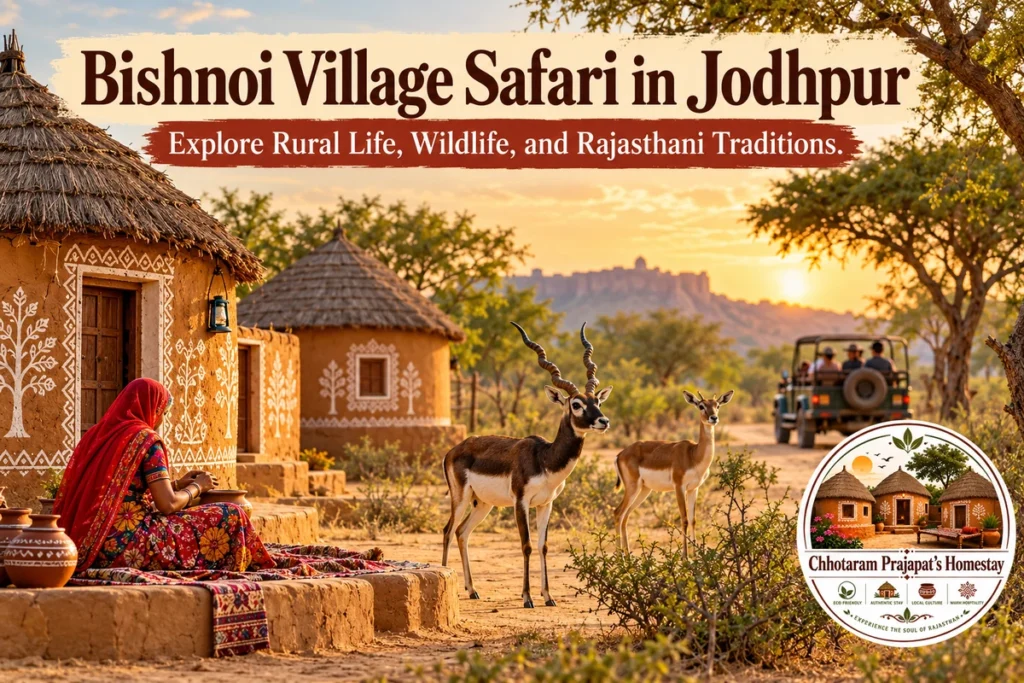
Jodhpur is widely recognised for its magnificent forts, blue-painted houses, historic palaces, and colourful markets. However, beyond the busy streets of the Blue City lies another side of Rajasthan that many first-time visitors overlook. The Bishnoi Village Safari offers an opportunity to explore traditional village life, observe native wildlife, meet local artisans, and understand a community known for its commitment to nature conservation.
Located in the countryside surrounding Jodhpur, Bishnoi villages provide a different experience from conventional sightseeing. Instead of visiting monuments, travellers can explore farming settlements, observe traditional crafts, and learn how local communities have maintained their cultural practices for generations.
Whether you are interested in wildlife photography, rural tourism, handicrafts, or Rajasthani traditions, this guide explains what to expect when planning your first Bishnoi Village Safari.
What Is the Bishnoi Village Safari in Jodhpur?
The Bishnoi Village Safari is a guided cultural and wildlife excursion through rural settlements near Jodhpur, Rajasthan. Most tours use jeeps to travel between villages, agricultural fields, artisan workshops, and natural habitats.
The experience introduces visitors to the Bishnoi community, which follows environmental and spiritual principles established by Guru Jambheshwar in the 15th century.
The community traditionally follows 29 principles that emphasise compassion, environmental protection, personal discipline, and respect for living creatures.
Unlike conventional wildlife safaris conducted inside national parks, the Bishnoi Village Safari combines wildlife observation with cultural interactions. Travellers may encounter animals in natural surroundings while also learning about the everyday lives of local families.
Where Is Bishnoi Village Located?
The Bishnoi villages are spread across the rural outskirts of Jodhpur rather than concentrated in one tourist destination.
Popular areas associated with village safari routes include:
- Guda Bishnoi Village: Known for blackbuck, chinkara, and birdwatching opportunities.
- Khejarli Village: Historically significant for the Bishnoi community’s environmental conservation movement.
- Salawas Village: Recognised for traditional handwoven dhurries and rural hospitality.
- Singhasni Village: Associated with traditional pottery-making.
Many village safari locations are approximately 20–30 kilometres from central Jodhpur, although distances vary depending on the chosen route.
Visitors can reach these areas by private vehicle or arrange a guided jeep safari through a local operator or accommodation provider.
Things to Experience During a Bishnoi Village Safari
1. Spot Blackbucks and Other Native Wildlife
Wildlife observation is one of the most interesting parts of the Bishnoi Village Safari.
The Bishnoi community has a longstanding tradition of protecting wild animals, particularly blackbucks and chinkaras.
During the safari, travellers may encounter:
- Blackbuck antelopes with distinctive spiral horns
- Chinkaras, also called Indian gazelles
- Indian peafowl
- Nilgai, commonly known as blue bulls
- Local and migratory bird species
Guda Bishnoi Lake and nearby open landscapes are particularly interesting for nature enthusiasts.
Early mornings and late afternoons generally provide more comfortable conditions for wildlife observation.
However, sightings depend on the season, weather, and animal movements. Visitors should never expect guaranteed encounters with wild animals.
2. Discover the Traditional Lifestyle of Bishnoi Families
A village safari is also an opportunity to understand rural life beyond popular tourist attractions.
Depending on the itinerary and the families welcoming visitors, travellers may observe traditional homes, farming activities, livestock care, and everyday household practices.
Conversations with local residents can provide insights into community customs, food habits, agricultural traditions, and environmental beliefs.
Visitors should remember that these are functioning villages where families continue their daily routines. Respectful interactions make the experience more meaningful for everyone.
3. Watch Traditional Pottery Making
Pottery is another cultural activity included in many village safari routes.
Local potters use traditional wheels to shape clay into water containers, cooking vessels, and decorative objects.
Visitors can observe how artisans prepare clay, shape different forms, and finish their products.
Some workshops also allow guests to try basic pottery techniques under the artisan’s guidance.
This experience helps travellers understand the skill and patience involved in handmade crafts.
4. Explore Dhurrie Weaving in Salawas Village
Salawas is particularly well known for its traditional dhurrie weaving.
Dhurries are flatwoven rugs made using techniques passed down through generations of artisan families.
Visitors can observe artisans working on handlooms, arranging coloured threads, and creating intricate geometric patterns.
Chhotaram Prajapat’s Homestay- Salawas, Jodhpur is connected with this traditional weaving heritage. The family also introduces visitors to local village experiences and crafts.
Watching the weaving process offers an understanding of how much time and manual skill go into producing a handmade dhurrie.
5. Learn About the Historic Khejarli Movement
The Bishnoi community’s commitment to environmental protection is closely associated with the Khejarli incident of 1730.
According to historical accounts, Amrita Devi Bishnoi and other community members opposed the cutting of khejri trees.
A total of 363 members of the community lost their lives while protecting the trees.
Today, the incident remains an important example of environmental conservation and community sacrifice in Indian history.
Travellers interested in this history can consider visiting the Khejarli memorial. However, this stop may require a longer or customised safari itinerary.
Best Time to Visit Bishnoi Village Safari
The most comfortable period for visiting Bishnoi villages is generally October to March, when Rajasthan experiences relatively cooler weather.
Winter mornings are particularly pleasant for village exploration, photography, and birdwatching.
From April to June, afternoon temperatures can become extremely high. Travellers visiting during these months should favour early morning excursions.
The monsoon season can bring changes to the landscape and bird activity, although rural road conditions may vary after rainfall.
For most first-time visitors, an early morning safari is a practical choice.
Bishnoi Village Safari Timings, Duration, and Cost
Most Bishnoi Village Safari experiences take approximately three to four hours, although longer tours are available.
Chhotaram Prajapat’s Homestay lists the following details for its jeep safari:
- Duration: Approximately 3–4 hours
- Departure times: 7:30 AM and 4:00 PM
- Vehicle: Private jeep accommodating up to six guests
- Best season: October to March
- Pricing: Available on request
Tour prices vary depending on the operator, number of participants, transport arrangements, and included activities.
Before confirming a safari, ask whether the quoted price covers transportation, guide services, village visits, drinking water, meals, and pickup or drop-off.
It is also worth checking whether wildlife observation and visits to specific villages are included in the planned route.
What Should First-Time Visitors Carry?
A little preparation makes rural exploration more comfortable.
Consider carrying comfortable walking shoes, breathable clothing, sunscreen, sunglasses, a hat, and a reusable water bottle.
A camera or binoculars can be useful for observing wildlife and birds from a respectful distance.
During winter, carrying a light jacket is advisable for early morning departures.
Visitors should also carry some cash for optional handicraft purchases or personal expenses.
How to Experience Bishnoi Village Safari Responsibly
Respectful tourism is particularly important when visiting rural communities and natural habitats.
Always ask permission before photographing residents or entering private spaces. Avoid interrupting artisans during their work and follow the instructions of local guides.
Never chase, feed, or disturb wildlife for photographs.
Travellers interested in purchasing handmade products can buy directly from local artisans when possible, supporting traditional skills and livelihoods.
The purpose of a village safari should be to learn about local culture rather than treat everyday village life as a staged attraction.
Where to Stay for a Bishnoi Village Experience?
Travellers can explore Bishnoi villages while staying in central Jodhpur. However, accommodation in the surrounding countryside provides additional opportunities to experience rural Rajasthan.
For travellers searching for the Best home stay in Jodhpur, proximity to village experiences, knowledgeable local hosts, and opportunities to learn about traditional crafts are useful factors to consider.
Chhotaram Prajapat’s Homestay in Salawas offers traditional village accommodation, home-cooked Rajasthani meals, and locally guided experiences, including Bishnoi Village Safari tours.
Its location also allows visitors to explore traditional dhurrie weaving and experience a quieter environment outside the city.
Final Thoughts
The Bishnoi Village Safari in Jodhpur offers much more than a short countryside excursion. It provides an opportunity to understand the relationship between local communities, wildlife, traditional crafts, and environmental conservation.
From observing blackbucks near village landscapes to meeting skilled potters and weavers, each experience introduces visitors to a different aspect of rural Rajasthan.
For first-time travellers, choosing a knowledgeable local guide, allowing sufficient time, and approaching village interactions respectfully can make the journey both educational and memorable.
Including a Bishnoi Village Safari in a Jodhpur itinerary is an excellent way to discover the region’s living cultural heritage beyond its famous forts and palaces.