Inside a Traditional Weaver’s Home in Salawas: Chhotaram Prajapat’s Firsthand Guide to Village Life Near Jodhpur

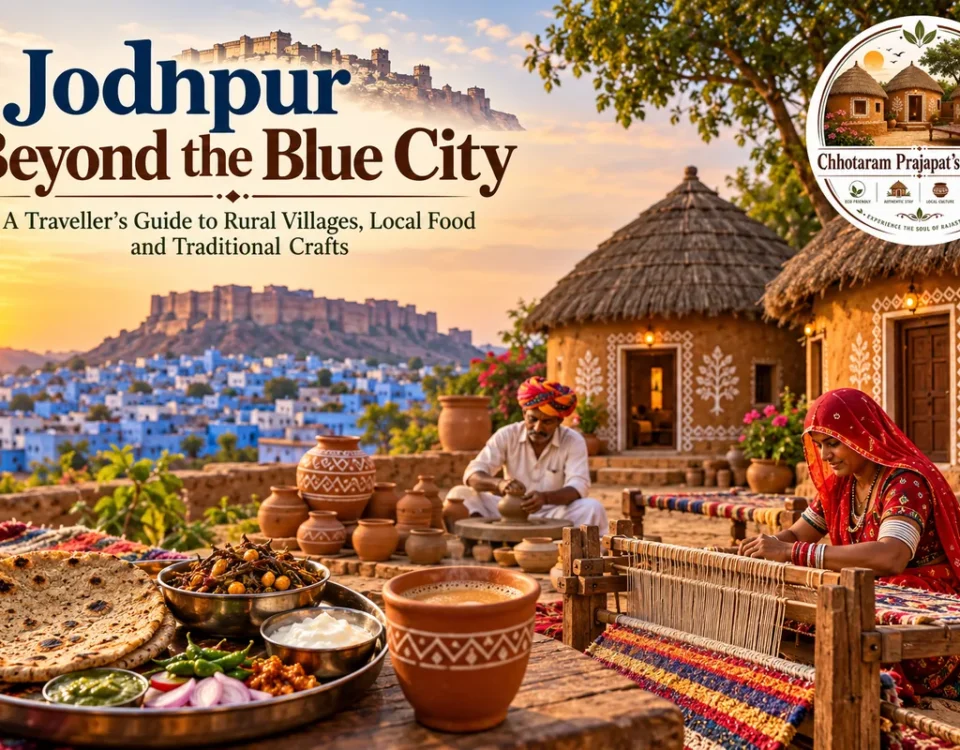
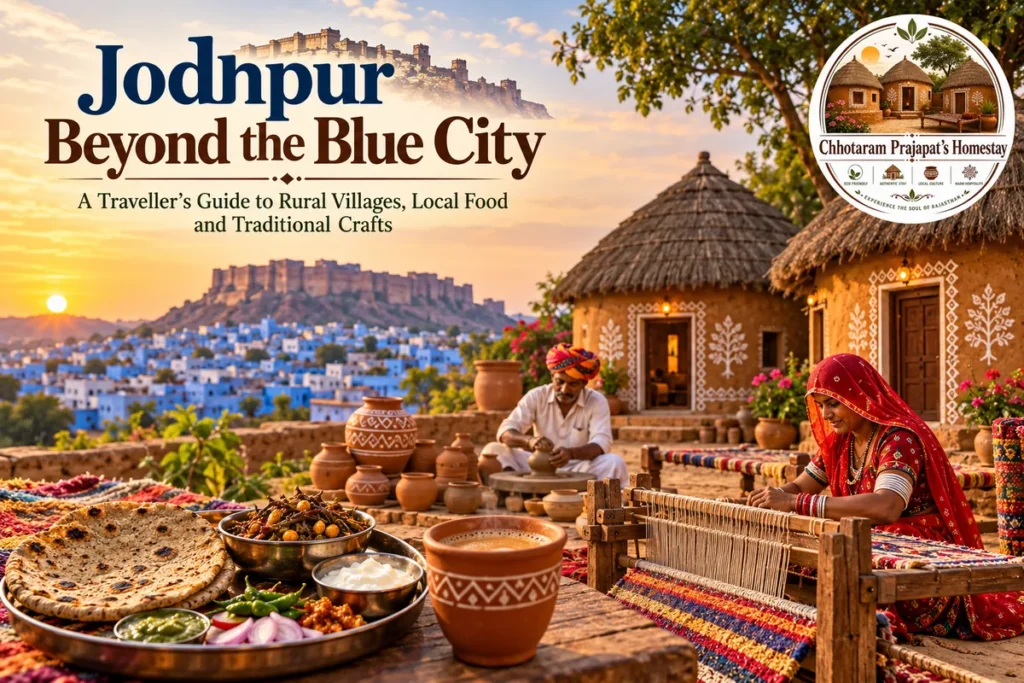
Jodhpur Beyond the Blue City: A Traveller’s Guide to Rural Villages, Local Food and Traditional Crafts
October 29, 2026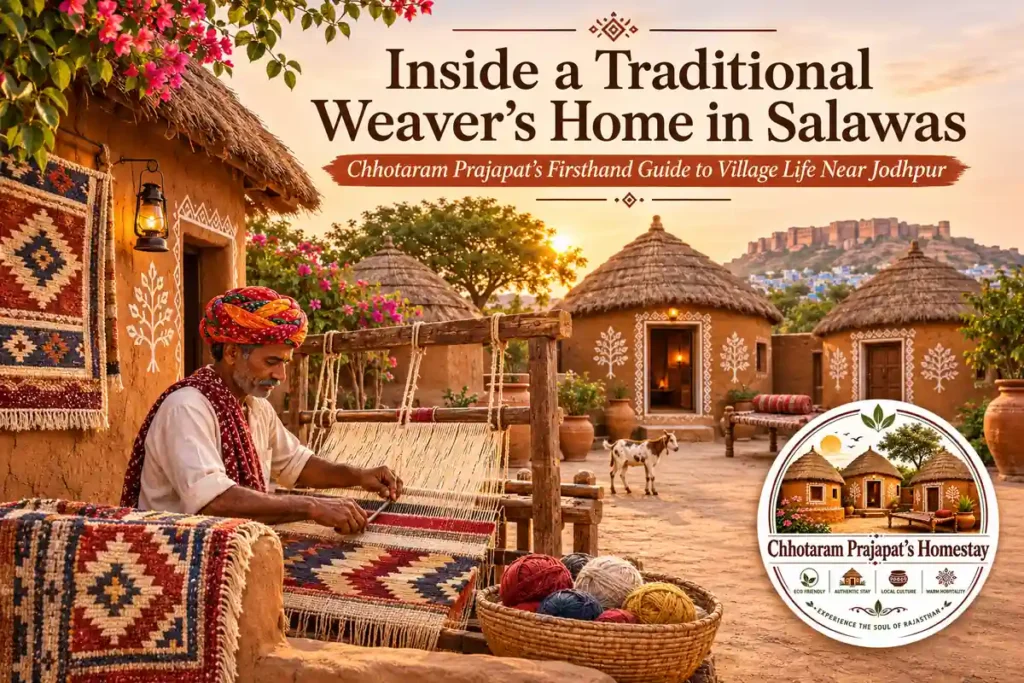
Jodhpur is famous for its magnificent Mehrangarh Fort, blue-painted houses, royal palaces, and colourful markets. But just beyond the busy streets of the Blue City lies a different side of Rajasthan, where traditional crafts, village hospitality, and centuries-old customs remain part of everyday life.
Located approximately 22 kilometres from Jodhpur, Salawas Village is known for its traditional dhurrie weaving and rural cultural heritage. For travellers looking beyond conventional sightseeing, this village offers an opportunity to discover how local families live, work, cook, and preserve their traditions.
One such family is the Prajapat family, whose weaving heritage is closely connected with Chhotaram Prajapat’s Homestay in Salawas, Jodhpur.
Established in 2009, this family-run homestay welcomes travellers interested in experiencing rural Rajasthan through traditional accommodation, home-cooked meals, local handicrafts, and village activities.
This guide introduces visitors to the weaving traditions of Salawas, the people behind the homestay, and what to expect when exploring village life near Jodhpur.
Meet Chhotaram Prajapat: A Traditional Weaver and Local Host
Chhotaram Prajapat is a traditional dhurrie artisan and the founder of Chhotaram Prajapat’s Homestay.
His family belongs to Salawas’s weaving community, where handmade rugs have long been an important source of livelihood.
In 2009, Chhotaram began welcoming travellers into his family’s home, creating opportunities for visitors to experience local hospitality and learn about traditional village occupations.
Today, the homestay continues to operate as a family-run property.
Chhotaram introduces visitors to local artisans and village traditions, while family members contribute to cooking, hospitality, and guided experiences.
Unlike accommodation built exclusively around tourist attractions, the homestay is connected to an existing rural community and its working traditions.
This connection between everyday village life and hospitality gives visitors an opportunity to explore Rajasthan from a local perspective.
Salawas Village: A Centre of Traditional Dhurrie Weaving
One of the main reasons to visit Salawas Village near Jodhpur is its handmade carpet-weaving heritage.
Rajasthan Tourism identifies Salawas as an important centre for handwoven cotton carpets, pottery, and traditional crafts.
The village is particularly associated with dhurries, flatwoven rugs traditionally used on floors and in household spaces.
How Are Traditional Salawas Dhurries Made?
The process of dhurrie weaving in Salawas involves arranging threads on a handloom and carefully interlacing them to create strong, decorative rugs.
Artisans generally follow several important stages:
- Preparing the yarn: Selecting suitable cotton, wool, or other traditional fibres.
- Setting the loom: Arranging the warp threads that form the foundation of the rug.
- Creating patterns: Weaving coloured threads across the warp to develop geometric or decorative designs.
- Tightening the weave: Using a traditional beating tool, often called a panja, to pack the threads firmly.
- Finishing the dhurrie: Removing the completed rug from the loom and finishing its edges.
Depending on the size, pattern, and complexity, completing a handmade dhurrie can require many hours of skilled work.
At Chhotaram Prajapat’s Homestay, visitors can learn about this weaving tradition and observe how local artisans use handlooms.
The experience helps travellers appreciate the difference between handmade textiles and mass-produced carpets.
Why Traditional Weaving Matters to the Local Community
Traditional weaving represents more than a handicraft in Salawas.
For many artisan families, it connects generations through practical knowledge, creativity, and livelihood.
The ability to prepare a loom, combine colours, maintain consistent weaving tension, and finish a durable rug requires experience.
These skills are traditionally learned through observation and practice.
When visitors take an interest in handmade dhurries, they also help create awareness of the craftsmanship behind each finished product.
Purchasing directly from artisans, where possible, can support local livelihoods.
For travellers interested in traditional handicrafts in Jodhpur, understanding the production process often makes a handmade souvenir more meaningful.
What Is It Like to Stay in a Traditional Village Homestay?
A village homestay offers a different experience from a hotel in central Jodhpur.
Instead of being surrounded by crowded streets and commercial attractions, visitors can enjoy a countryside setting and learn about local routines.
Chhotaram Prajapat’s Homestay offers accommodation inspired by traditional Rajasthani mud-hut architecture.
The property includes traditional huts and suites, combining regional design with guest facilities.
Its traditional huts feature comfortable bedrooms, private bathrooms, and handmade interiors.
Guests can spend time exploring the surroundings, learning about local crafts, and enjoying meals prepared by the host family.
For travellers looking for an authentic homestay in Jodhpur, Salawas offers an opportunity to experience village hospitality while remaining within travelling distance of the city’s major attractions.
Experience Home-Cooked Rajasthani Food With the Prajapat Family
Food is an important part of Rajasthan’s cultural identity.
At Chhotaram Prajapat’s Homestay, Mamata Prajapat and Leela Prajapat prepare traditional vegetarian meals using family recipes and locally available ingredients.
Visitors may enjoy dishes such as bajra roti, dal, seasonal vegetables, and other regional preparations.
The homestay also offers a traditional cooking workshop where guests can learn directly from the family.
During these sessions, participants can practise preparing roti, using regional spices, and cooking everyday Rajasthani dishes.
The workshop generally takes approximately two hours, with advance booking recommended.
Learning how local families prepare their meals offers another perspective on rural life that goes beyond restaurant dining.
Explore Everyday Village Life Near Jodhpur
A stay in Salawas can also introduce travellers to the different occupations and customs of rural Rajasthan.
Depending on the arrangements, visitors can explore nearby settlements and meet people involved in farming, pottery, weaving, and other traditional activities.
Guided village experiences may include observing artisans working in their workshops, learning about agricultural practices, and understanding the importance of livestock in rural households.
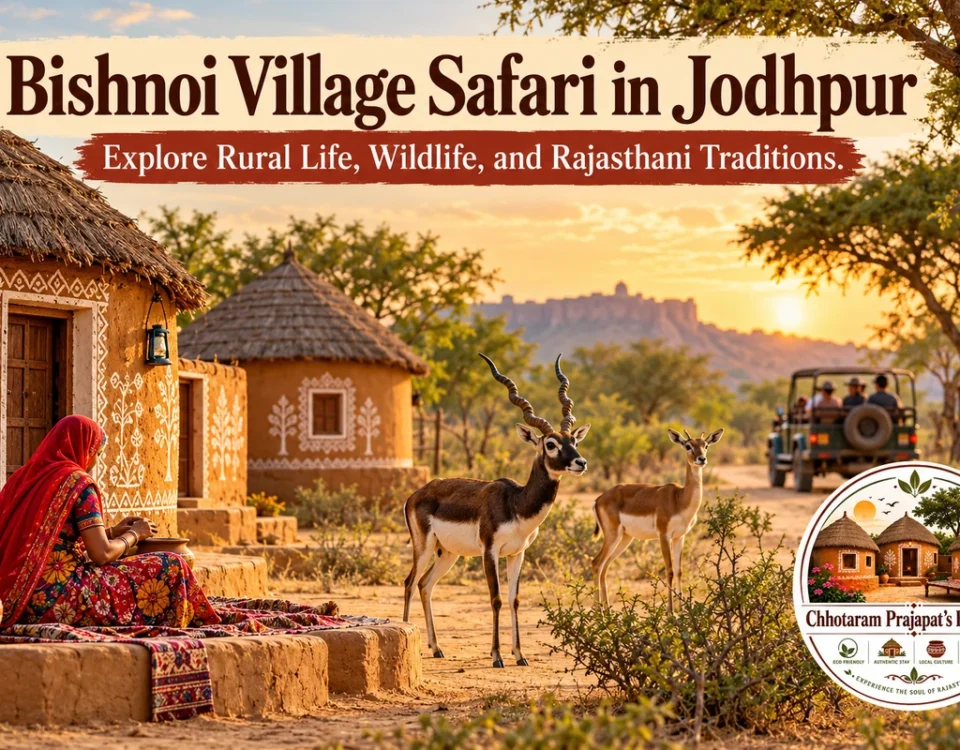
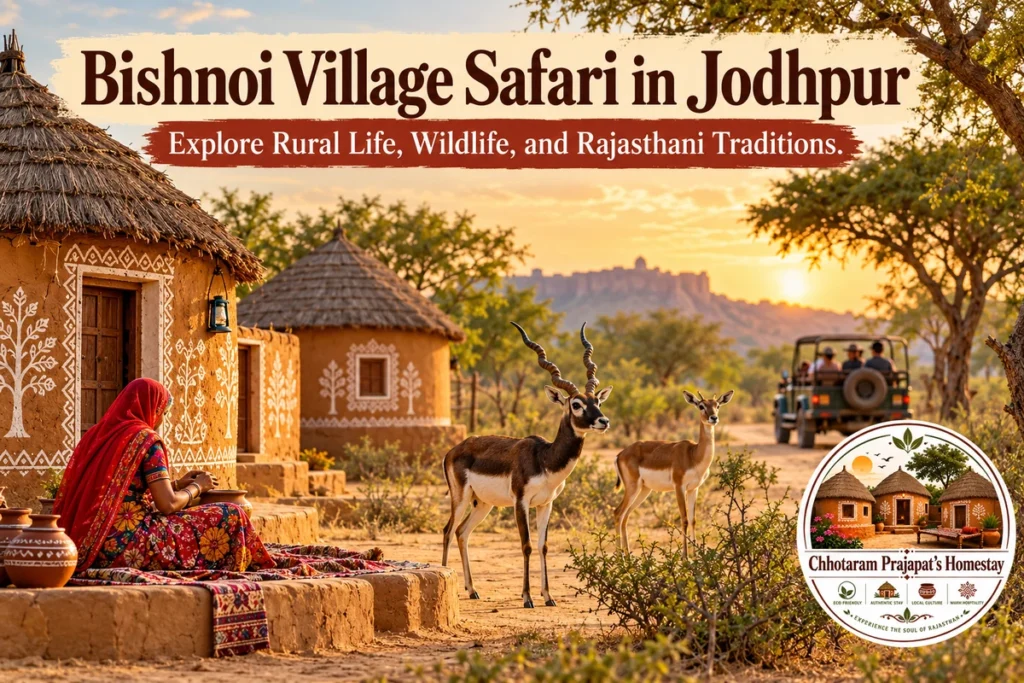
The Prajapat family also organises a Bishnoi Village Safari near Jodhpur, introducing travellers to neighbouring communities and their conservation traditions.
The Bishnoi community is particularly respected for protecting trees and wildlife.
During guided excursions, travellers may see blackbucks, chinkaras, and local bird species in the surrounding countryside.
Wildlife sightings are seasonal and cannot be guaranteed.
These activities allow visitors to explore the relationship between the landscape, traditional occupations, and local communities.
How to Plan a Visit to Salawas Village
Salawas is approximately 22 kilometres from Jodhpur and can be reached by private taxi or prearranged transport.
For visitors travelling from central Jodhpur, a half-day excursion can provide an introduction to the village’s weaving heritage.
However, staying overnight offers more time to enjoy the countryside and participate in family activities.
A suggested overnight experience could include arriving in Salawas during the afternoon, observing traditional dhurrie weaving, enjoying a home-cooked dinner, and spending the following morning exploring nearby villages.
Travellers interested in cooking workshops or guided safaris should arrange these experiences in advance.
Best Time to Visit
October to March is generally the most comfortable season for exploring villages around Jodhpur.
Temperatures are more pleasant for outdoor activities, countryside walks, and wildlife observation.
During summer, particularly from April to June, early morning activities are preferable because afternoon temperatures can become extremely hot.
Comfortable shoes, light clothing, sunscreen, and drinking water are useful when visiting rural areas.
Visitors should also ask permission before photographing residents or entering private homes and workshops.
Frequently Asked Questions About Salawas Village
What is Salawas Village famous for?
Salawas Village is particularly famous for traditional handwoven dhurries. It is also associated with pottery, local handicrafts, and rural Rajasthani culture.
How far is Salawas Village from Jodhpur?
Salawas is approximately 22 kilometres from Jodhpur city. Travel time depends on the starting location, traffic, and route.
Can tourists learn dhurrie weaving in Salawas?
Visitors can observe traditional weaving demonstrations, and some experiences offer opportunities to try basic techniques under an artisan’s guidance. Availability should be confirmed beforehand.
Is Salawas suitable for an overnight village stay?
Yes. Chhotaram Prajapat’s Homestay offers traditional-style accommodation for travellers interested in spending more time exploring rural Rajasthan.
Final Thoughts: Discover the People Behind Rajasthan’s Traditions
Rajasthan’s cultural heritage is not found only in its forts, palaces, and museums. It also lives in village homes, family kitchens, traditional workshops, and the skills passed between generations.
Salawas Village offers travellers an opportunity to discover this living heritage through traditional dhurrie weaving, home-cooked Rajasthani food, and interactions with local communities.
The Prajapat family’s connection to weaving and rural hospitality provides a particularly relevant introduction to these traditions.
For visitors planning a trip to Jodhpur, spending time in Salawas can add a valuable cultural dimension to their Rajasthan itinerary.
Discover village life, traditional weaving, and local hospitality at Chhotaram Prajapat’s Homestay – Salawas, Jodhpur.